Column · @atvquadbikedubaimag
How to Choose the Right Quad Bike for Desert Riding in Dubai
Choosing an ATV for desert riding is less about picking the biggest machine and more about matching the bike to the rider, the terrain and the style of ride. Dubai desert conditions can shift from firm tracks to soft sand dune climbs in a short distance, so the right choice makes the day safer and more enjoyable. Work through the points below in order, and treat each one as a filter that narrows the field.
Start with the rider, not the machine
Begin by being honest about experience. A first-time rider should look for a bike with manageable power, smooth throttle response and a seated riding position that feels stable. More experienced riders may prefer a larger engine, but extra power is not useful if it makes the bike hard to control in sand. Height and reach matter too. When seated, the rider should be able to place both feet firmly on the footrests, reach the handlebars without stretching and operate the controls without awkward movement.
Think about who will ride most. A bike that suits one person may feel heavy or tiring for another. If several riders with different experience levels are involved, choose based on the least confident rider rather than the most confident one. That keeps the group together and reduces the chance of someone being pushed beyond their ability.
Decide what kind of ride you want
Before comparing models, set the purpose. A relaxed ride over marked trails calls for a different setup than a session built around dune bashing. Trail riding rewards stability, predictable handling and comfort over longer stretches. More aggressive dune riding calls for stronger torque, good suspension travel and a chassis that stays composed when the surface changes.
Group rides also change the decision. If the day includes a guided tour, follow the ride format and listen to the briefing about pace, spacing and route conditions. Riding alone in open desert is a different matter and requires a higher level of judgement, navigation and recovery planning. For most visitors, a structured route with clear rules is the better starting point.
Match quad bike types to the terrain
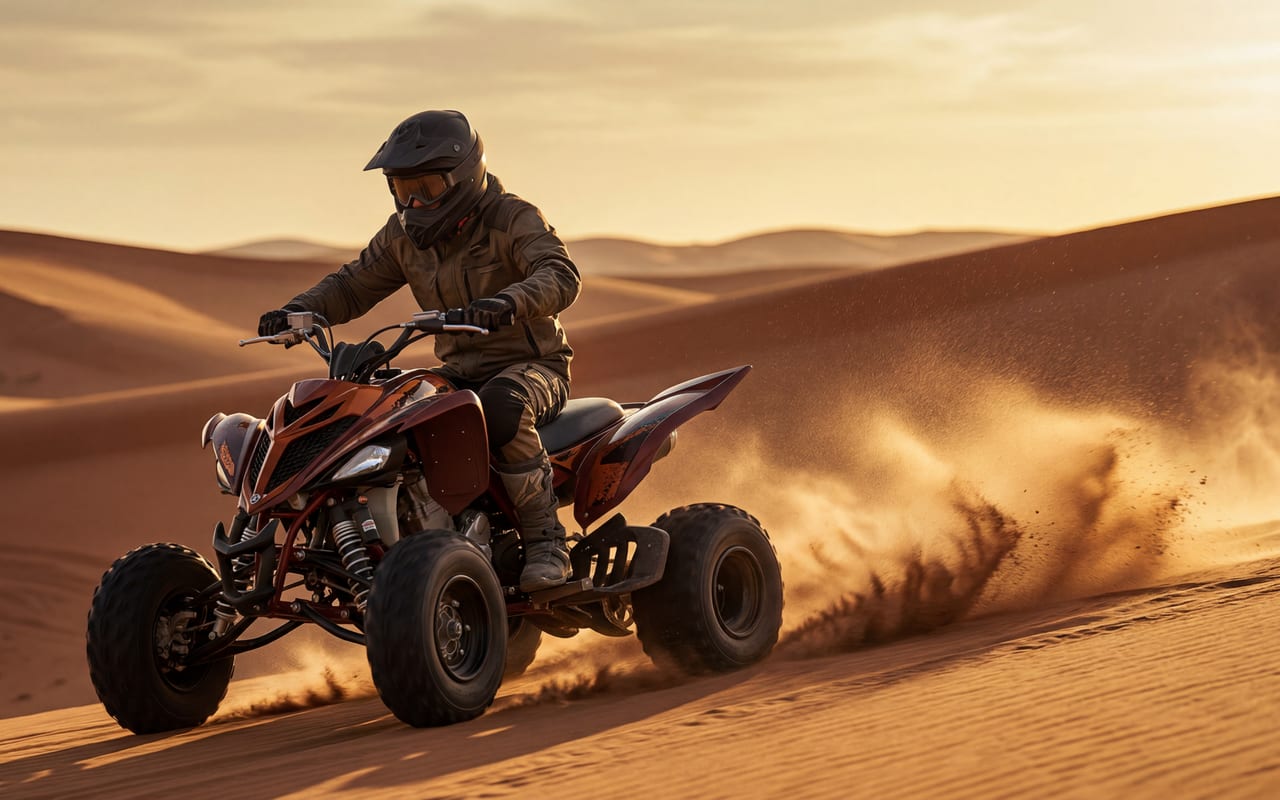
Quad bike types are usually grouped by intended use and engine size. Youth or entry-level machines are lighter and calmer, which helps new riders build control. Mid-size recreational bikes suit riders who have basic off-road skills and want a balanced ride. Larger sport or utility machines offer more power and load capacity, but they demand stronger technique and better physical control.
For desert terrain, pay attention to weight, suspension and tyre pattern. A lighter bike can feel less intimidating, though it may be more affected by wind and loose sand. A heavier bike can feel planted, but it is harder to move if it stalls or gets stuck. Wide, low-pressure sand-friendly tyres help the bike float over soft ground, while worn or unsuitable tyres can make steering vague and increase the chance of sinking in.
Any search for atv quad bike dubai should include a close look at how the bike is specified for sand rather than just its engine size. A machine with moderate power, healthy suspension and suitable tyres is often a better match than a high-output bike that is difficult to manage.
Check the safety setup before anything else
Safety gear is not an accessory to add later. A helmet should fit snugly, sit level and fasten securely. Gloves improve grip and protect hands from vibration and brush. Eye protection matters in sandy conditions, especially when other riders are kicking up dust. Long trousers and a top that covers the legs and arms reduce scrapes and sun exposure. Closed footwear with good grip is preferable to sandals.
Ask how the bike is prepared before a ride. The machine should be clean, unusually loose parts should be absent, and controls should respond normally. Tyres should hold air and show even wear. Brakes need to feel firm and consistent. Suspension should not bottom out harshly or leak fluid. If a bike looks poorly maintained, walk away rather than trying to compensate while riding.
Do not attempt repairs to brakes, fuel systems, electrical faults or sealed suspension parts as a quick fix before a ride. Those issues need a qualified professional. A simple visual check is useful, but mechanical faults are not something to test on open sand.
Understand the rules and local limits
Desert riding is not the same as riding on public roads. Speed limits and route rules may apply depending on the area and the operator. A responsible choice includes knowing where riding is allowed, what pace is expected and how riders should signal or stay spaced. Faster is not automatically better. In sand, controlled momentum often matters more than raw speed.
Ask about the route, the riding area and the rules before choosing a bike. If the plan includes narrow tracks, busy areas or mixed abilities, a calmer machine is usually easier to live with. If the route includes open stretches and experienced riders, a more capable bike may fit, provided the rider has the skill to use it smoothly.
Judge comfort and control in person
Static checks only go so far. A good fit should feel natural before the engine does any work. Sit on the bike and check the following points in a calm area:
- Feet rest securely on the footrests with knees slightly bent.
- Hands reach the grips without locked elbows or raised shoulders.
- Throttle, brake and gear controls can be used without looking away from the route.
- The seat feels supportive, not narrow or slippery.
- Visibility is clear from the riding position, especially to the sides.
Pay attention to how the bike feels when it is moved a short distance at walking pace. Steering should feel smooth, not stiff or loose. Odd noises, uneven braking or a pulling sensation are warning signs. A bike that already feels awkward at low speed will not become easier on a sand dune.
Ask practical questions before committing
A clear conversation prevents most bad choices. Ask what the bike is suited to, what experience level it fits and what the riding route involves. If a rider is new, say so plainly. If the group includes children or less confident riders, make that clear as well. The aim is to choose a bike that matches the day, not one that only looks impressive parked in the sun.
It is also sensible to ask what happens if the pace changes, the route gets softer or someone needs assistance. Good planning does not remove all difficulty, but it makes the ride easier to manage. Operators that explain basic riding techniques, safety expectations and route boundaries help riders make better decisions from the start.
Make the final comparison
When the options are side by side, compare them in the same order each time: rider ability, intended route, fit, tyres, suspension, maintenance condition and safety equipment. This prevents engine size from taking over the decision. A well-matched bike should feel steady, responsive and tiring only in a normal way after a full ride.
One useful search phrase people use is atv quad bike dubai, but the better question is which machine suits the rider and the desert conditions. Choose the bike that gives clean control at low speed, enough torque for sand and a riding position that stays comfortable. If anything feels uncertain, reduce the challenge rather than relying on power to solve it. The right choice is the one that lets the rider stay relaxed, attentive and within their limits for the whole ride.